
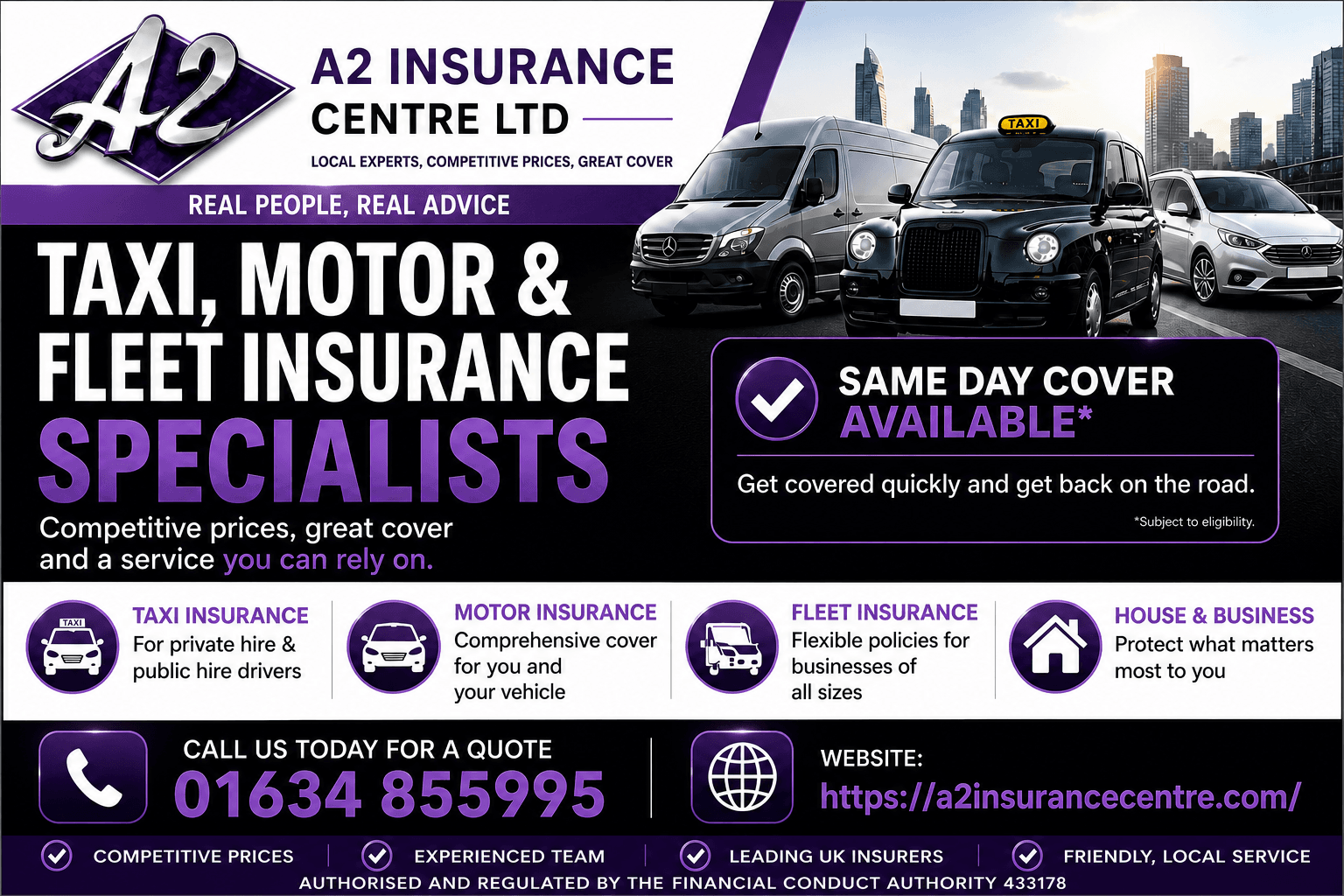
Private Hire Insurance: A Guide for UK Drivers
Private hire insurance is specialist motor cover for drivers who carry passengers for payment after a journey has been booked in advance. It is designed for the risks of working as a private hire driver and differs from standard car insurance, which usually does not cover paid passenger journeys.
Whether you drive for a minicab operator, use a booking app or run your own private hire business, choosing suitable cover is essential. The right policy can help protect you, your passengers and your vehicle while you work.
What is private hire insurance?
Private hire insurance covers a vehicle used to carry passengers for hire and reward. In the UK, private hire journeys generally need to be booked through a licensed operator in advance. Private hire drivers must not accept passengers who hail them in the street or use taxi ranks in the way licensed public hire vehicles can.
A standard social, domestic and pleasure policy is not normally suitable for this work. If you use your car for paid passenger journeys without the correct cover, your insurer may refuse a claim and you could face legal or licensing consequences.
Types of private hire cover
Policies commonly offer one of the following levels of motor insurance:
- Third party only: Covers your legal liability for injury to others and damage to their property. It does not cover damage to your own vehicle.
- Third party, fire and theft: Includes third-party cover and protection if your vehicle is stolen or damaged by fire, subject to the policy terms.
- Comprehensive: Includes third-party, fire and theft cover and may also cover damage to your own vehicle following an accident, even if you are at fault.
The precise protection varies between insurers. Check the policy wording rather than assuming that every policy includes the same benefits.
What can affect the cost?
The price of private hire insurance depends on a range of factors, including:
- your age, driving experience and claims history
- where you live and where you mainly work
- the vehicle’s make, model, age and value
- the annual mileage and number of hours you drive
- the number of drivers covered by the policy
- the level of cover, excess and any optional extras
Providing accurate information is important. Tell the insurer how the vehicle will be used, who will drive it and whether it is also used privately. Incorrect or incomplete details could affect a claim or the validity of your cover.
Optional cover to consider
Depending on your work and circumstances, you may want to ask about additional protection, such as:
- Public liability insurance: May help cover claims involving injury or property damage connected with your business, outside the scope of motor insurance. Licensing authorities or operators may require it.
- Legal expenses cover: May help with certain legal costs, subject to the policy terms.
- Breakdown assistance: Can help if your vehicle becomes undriveable while you are working.
- Replacement vehicle cover: May provide a temporary vehicle after an insured incident, if included in the policy.
- Personal accident cover: May provide a benefit following certain injuries, as set out in the policy.
These extras are not automatically included, and their limits, exclusions and conditions can differ between providers.
Licensing and insurance requirements
Private hire drivers and vehicles are subject to licensing rules. Requirements can vary between licensing authorities, so check with the council or other authority responsible for your licence. You should also confirm that your insurance meets any requirements set by your licensing authority, booking operator or platform.
Before beginning work, make sure the policy specifically covers private hire or hire and reward use. Check that the vehicle, drivers and working arrangements match the details on the policy schedule.
How to compare private hire insurance
When comparing quotes, look beyond the headline price. Check:
- the type of cover and what is excluded
- the excess you would need to pay if you made a claim
- cover for all intended drivers and vehicle uses
- whether private use is included
- any mileage, area or working-hour restrictions
- the availability and conditions of optional benefits
- how to make a claim and contact the insurer
Choose cover that fits your work
Private hire insurance is a key part of working safely and responsibly as a driver. Comparing policies carefully can help you find cover that suits your vehicle, passengers and working arrangements. Read the policy documents, check local licensing requirements and ask the insurer or broker to clarify anything you are unsure about before buying.
7 Essential Private Hire Insurance Tips for UK Drivers
- Choose cover that explicitly includes private hire and hire-and-reward use.
- Check the policy matches your licence and local authority requirements.
- Confirm every driver is named and meets the insurer’s criteria.
- Declare all vehicle uses and keep mileage details accurate.
- Compare excesses, exclusions and any limits on passenger cover.
- Tell your insurer promptly about vehicle or business changes.
- Keep your policy, licence and vehicle documents up to date.
Choose cover that explicitly includes private hire and hire-and-reward use.
Choose a policy that explicitly covers private hire and hire-and-reward use, as standard car insurance usually excludes carrying passengers for payment. Check the policy wording and schedule before buying to confirm that your work—whether booked through an operator, an app or another approved service—is covered. If anything is unclear, ask the insurer or broker to confirm in writing.
Check the policy matches your licence and local authority requirements.
Before taking bookings, check that your private hire insurance matches the conditions of your driver and vehicle licences, as well as your local authority’s requirements. Rules can vary between councils, so confirm the required level of cover and make sure your policy details accurately reflect how and where you work. If anything is unclear, ask your insurer or licensing authority before starting work.
Confirm every driver is named and meets the insurer’s criteria.
Before taking out private hire insurance, check that every person who may drive the vehicle is named on the policy and meets the insurer’s eligibility criteria. These can include minimum age, driving experience, licence history and claims record. If a driver is not correctly declared, a claim could be refused or your cover affected, so tell your insurer about any changes and never assume another driver is automatically covered.
Declare all vehicle uses and keep mileage details accurate.
Be clear about every way you use your vehicle, including private journeys and any private hire work, and give your insurer an accurate estimate of your annual mileage. If your use or mileage changes, update your insurer promptly. Inaccurate or outdated details could affect your cover or a claim, so keep records of your mileage and tell your insurer about any significant changes.
Compare excesses, exclusions and any limits on passenger cover.
When comparing private hire insurance, look beyond the premium and check the excess you would have to pay if you made a claim. Read the exclusions carefully so you know what is not covered, and review any limits or conditions relating to passenger cover. These details can vary between policies, so checking them before you buy helps you understand the protection you would receive and avoid unwelcome surprises later.
Tell your insurer promptly about vehicle or business changes.
Tell your insurer promptly about any changes to your vehicle or business, such as replacing your car, adding a driver, changing your operating area or taking on different types of work. These details can affect your cover and premium, so keeping your insurer informed helps ensure your policy remains suitable and that claims are less likely to be delayed or declined.
Keep your policy, licence and vehicle documents up to date.
Keep your private hire insurance policy, driver’s licence and vehicle documents up to date to help ensure you can continue working without disruption. Check renewal dates, tell your insurer and licensing authority promptly about any changes, and make sure your vehicle meets the required standards. Out-of-date or inaccurate documents could affect your licence, leave you without valid cover or cause problems if you need to make a claim.